

Every parent is sure to be excited about their child's first tooth. However, if oral health care is not properly managed, tooth decay can occur and negatively impact a child's health at this age. For example, toothaches can make chewing food more difficult, making your child fussy and not enjoying life as much as they should. Therefore, taking care of your child's dental health from the start, including proper tooth brushing, can help prevent tooth decay and allow your little one to happily smile and show off their clean teeth.
When should you start caring for your child's dental health?
Taking care of your baby's oral and dental hygiene can be done since he or she is still young. Even when babies don't have teeth yet, you should clean their gums after feedings by holding them in your arms. Then, wrap a clean, soft cloth around your thumb and dip the cloth in warm water and gently wipe away all the milk residue in their mouth and gums. Generally, your baby's first baby tooth will start to emerge between the ages of 4 and 6 months. Parents will notice their baby's teeth starting to emerge from their behavior when they start gnawing on nearby objects or drooling more than usual. The two lower front teeth will usually emerge first. For older children aged 3 years and up who have all their baby teeth, training your little one to brush their teeth properly every day will help keep their teeth clean and strong, and prevent tooth decay.
Choose a toothpaste that is safe for your child.
While there are many flavors and scents of children's toothpaste to choose from, the most important thing is to choose a toothpaste with cleaning agents that are safe for your baby's body, such as Babi Mild Gentle Protection Red Berry Toothpaste. It gently cleans and protects your baby's gums and teeth with Food Grade®* ingredients and ECOCERT® certified organic aloe vera extract. Importantly, it also contains 1,000 ppm fluoride and Calcium Lactate to help prevent tooth decay, without harmful substances like parabens and surfactants (SLS/SLES), which can be a cause of irritation and risk of accumulation in the body when used for a long time.
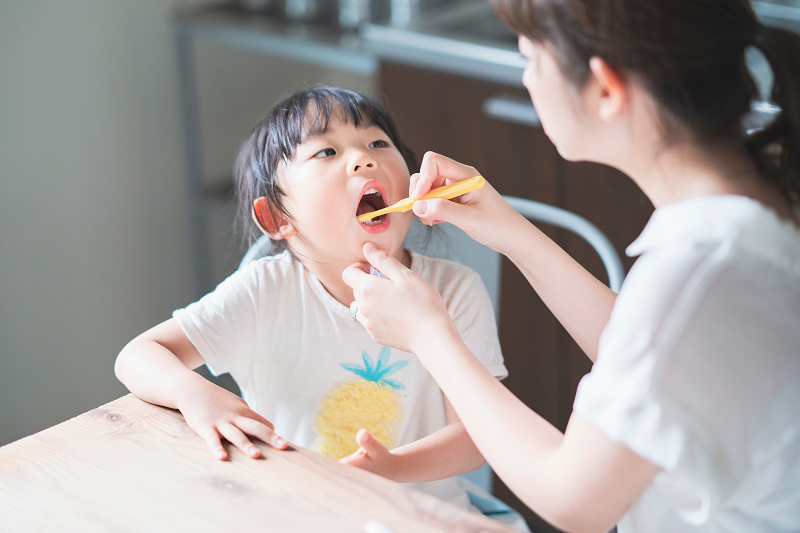
Techniques for encouraging children to brush their teeth with children's toothpaste
In addition to the quality of toothpaste that can safely clean your child's mouth and teeth, it is equally important to make brushing their teeth fun for your little one, especially for older children aged 3 and up who are at a very playful age. Letting your child try a children's toothpaste with a fruity scent and a gentle flavor that won't irritate them and discourage them from brushing their teeth will help your child enjoy brushing their teeth and be more willing to do so. Parents should prioritize choosing a soft nylon-bristled toothbrush for their child. Try to persuade your child to be interested in brushing their teeth by letting them choose the color and design of the toothbrush they like. While brushing their teeth, you don't have to force them to brush for a full 3-4 minutes. Instead, encourage them or offer small rewards when they brush their teeth regularly every day. Finally, your child should see a dentist for a regular dental checkup every year from the time their baby teeth appear.
Steps to teach children how to brush their teeth properly
Of course, good oral hygiene cannot be complete without proper brushing. To teach your little one how to brush their teeth properly, parents can try brushing their teeth in front of a mirror together with their child, following these steps:
1. Use a pea-sized amount of toothpaste, which is sufficient for children this age. Then, have your child hold the brush firmly, with the bristles against the gum line at a 45-degree angle to the teeth.
2. Let your child move the brush back and forth slightly. You can help hold your child's hand while they brush slowly, so that they get used to it and then let them brush on their own.
3. While brushing, let the bristles brush from the gums across the teeth. When brushing the upper teeth, brush downwards, and when brushing the lower teeth, brush upwards. Then, brush all over the mouth, both the outside and inside of the upper and lower teeth, as well as along the left and right teeth until you are sure they are clean.
It's normal if your child isn't comfortable brushing their teeth right away. Parents may need to be patient and gradually teach their child how to brush their teeth, and provide rewards to encourage them to brush their teeth regularly every day for their child's healthy, clean teeth and gums.
*90% of the ingredients are food grade.


