

Hygiene cannot be neglected when caring for a baby in diapers, especially when they have to wear diapers almost all day. If germs accumulate over a long period of time, it can irritate the skin and lead to diaper rash. Parents therefore need to pay attention to every step of putting on and changing their baby's diaper, whether it's cleaning or properly nourishing the skin to protect their baby's delicate skin and build a strong foundation for health from infancy.
What kind of diaper should I choose for my baby?
Diapers for little ones are one of the first things parents should prepare early on, according to the needs of each household. But with so many options, new parents are even more unsure of which type of diaper to choose that will be good for their baby's delicate skin. Generally, there are two main types of diapers: regular diapers and disposable diapers, each with its own advantages and disadvantages, as follows:
- Advantages and disadvantages of regular diapers
- Regular diapers are a great option for parents looking to save money on diapers, as they're cheaper and can be reused and washed multiple times. Importantly, regular diapers are often made from cotton, muslin, and wool, which makes them gentler on your baby's skin, depending on the type of fabric used. They're also more breathable. While regular diapers may not absorb liquid as well as disposables, requiring more frequent changes, they're also good for your baby's skin, as they don't require prolonged periods of damp diaper wear. This reduces the risk of diaper rash and makes potty training easier.
- The disadvantage of regular diapers is the added hassle of changing, removing and putting them back on. Parents may need to use their skills to pin the cloth to fit their baby, and the added burden of washing heavily soiled clothes almost every day. They may also be less flexible when changing diapers outside the home or when traveling.
- Advantages and disadvantages of disposable diapers
- The advantage of disposable diapers is that they are easy to use because they can be removed and replaced immediately without having to fasten the cloth, which is very difficult. When they are soiled with poop, they can be replaced without having to be washed. The highlight of disposable diapers is their better absorption of liquids, making it less likely for stains to come out. They do not need to be changed as often.
- Disadvantages of disposable diapers include the increased cost associated with the relatively high price per piece. Even though they are highly absorbent, they also contain chemicals that can irritate your baby's skin. The moisture from the fluids that accumulate in the multiple layers of the diaper is also a major cause of diaper rash.
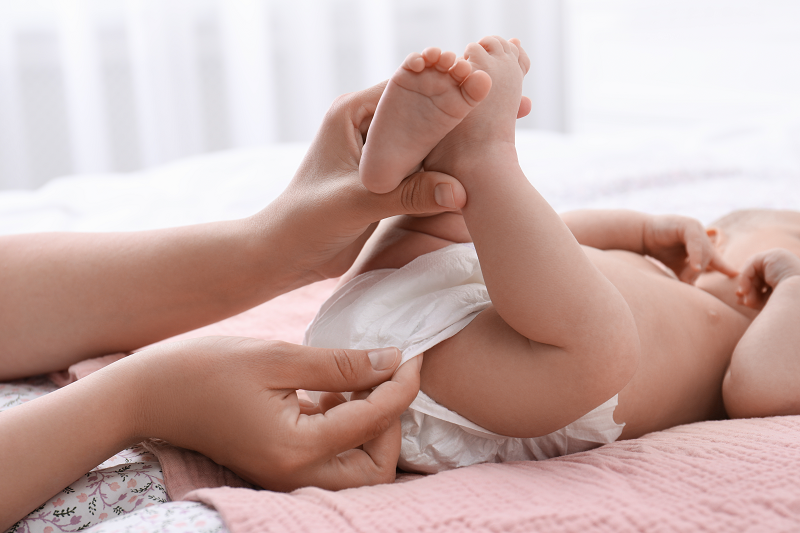
How to change your baby's diaper with care and hygiene
Throughout the diaper rash period, babies need careful parental care. The main causes of diaper rash are wearing dirty diapers for too long, dry and chafed skin, and contact with irritants. Therefore, to prevent all sorts of discomfort, parents should be careful when changing diapers in a hygienic manner, following these steps:
1. Prepare the area and equipment needed for changing your baby's diaper, including a new, clean diaper, a towel for cleaning, and a changing pad. Some families may choose to place a changing table in the bathroom for greater convenience.
2. Parents should wash their hands thoroughly before changing a diaper every time. Before holding the baby, use a soft voice to tell the baby that a diaper change is about to occur and not be startled. Then, place the baby on the changing pad or a clean, flat area. Remove the dirty diaper and put it in the basket to be washed separately or fold it neatly before throwing it away to prevent odor and save trash can space.
3. Gently hold your baby against your chest, facing the water basin, to cleanse the baby's skin that is soiled with poop or urine. Let the water run gently so as not to startle your baby. You can use one hand to hold your baby's feet close to your chest and use the other hand to scoop water to clean your baby more easily.
4. Once clean, place your baby back on the changing table mat. While you're letting your baby dry, wash your hands thoroughly again before using a soft towel to wipe away any excess moisture.
5. Before putting on a new diaper, apply baby cream to your baby's skin to keep it moisturized and reduce friction between the diaper and your baby's body. Gentle touching and massaging your baby can also help him relax and fall asleep more easily.
How important is baby cream for diaper-aged babies?
Baby cream is a rich moisturizer that helps build a protective barrier for your baby's delicate skin. This is because baby skin isn't yet strong enough and can't retain moisture as well as adults. Since your baby has to wear diapers that can rub at any time, applying baby cream before changing their diaper is essential. It provides another layer of protection from irritants and reduces the risk of diaper rash. Another important thing not to overlook is choosing a cream designed specifically for babies, such as Ultra Mild Bioganic Baby Cream. This Bioganic formula moisturizer combines the gentle benefits of two natural organic plant essences: argan oil and olive oil. It gently soothes your baby's skin and prevents it from becoming dry.
Most babies begin potty training between 18 and 30 months of age. However, it's not unusual for your baby to still be potty trained after this age, as some babies may take up to 4 years. Every child has a different growth spurt, so it's important for parents to be dedicated and attentive to their little ones' small steps so they can grow strong and healthy.


